
How to Choose a Middle Name That Flows
How to choose a middle name that flows, from syllable rhythm and sound clashes to initials, family honors, one-syllable fillers, and skipping it entirely.
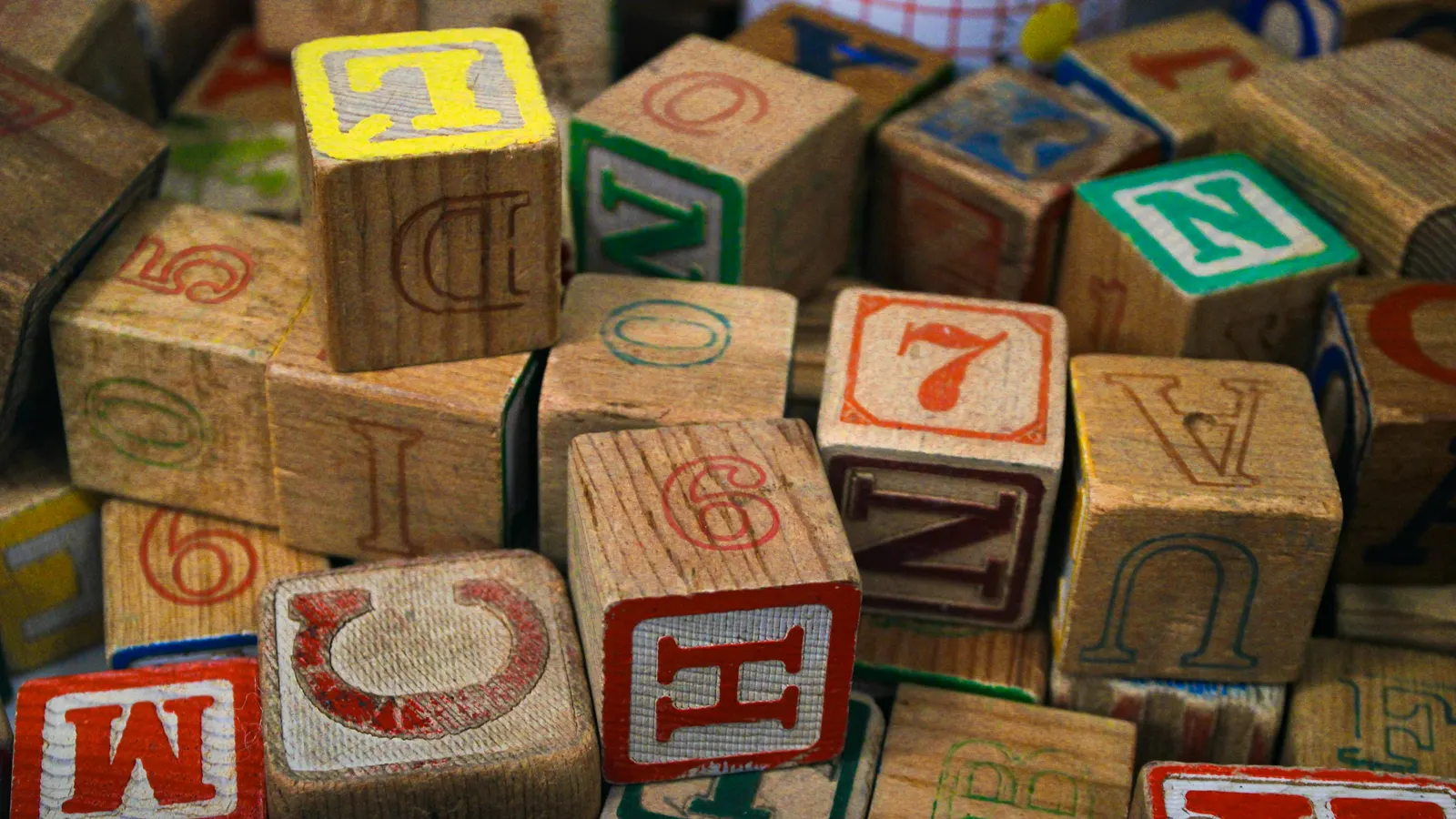
If you're working out how to choose a middle name, the short answer is to pick a name that changes rhythm with the first name and surname around it, doesn't blur into either of them, and leaves initials you can live with. After that the job is mostly a question of what you want the slot to do. Some parents want it to carry a grandparent. Some just want a bridge between two other words. Both are good reasons, and they lead to different names.
The middle name is also the slot with the most freedom. Your child will rarely be called by it, it won't be shouted across a playground, and nobody will ask how to spell it on the phone. That makes it the right place for a name you love that would be too much as a first name. It also makes it easy to choose carelessly.
Start with rhythm: how to choose a middle name by syllables
Say the full name out loud, all three parts, at normal speed. Then say it the way it would be read out at a graduation. You're listening for whether it has a shape or just a run of same-length beats.
The most dependable rule: vary the syllable counts. Three names with the same number of syllables tend to sound like a list rather than a name:
| Pattern | Example | How it sounds |
|---|---|---|
| 1-1-1 | Jack Paul Smith | Choppy, like three separate words |
| 2-2-2 | Ella Marie Baxter | Sing-song, a little flat |
| 1-3-1 | Jane Elizabeth Ford | Balanced, with a long middle to carry it |
| 3-1-2 | Oliver James Tanner | Steps down, then lands |
| 2-1-3 | Henry Cole Davidson | Brisk middle, long finish |
None of these are forbidden, and plenty of people have a 2-2-2 name and are perfectly happy with it. But if a combination sounds slightly off and you can't say why, count the syllables. It's usually that.
Stress matters as much as count. "Eleanor" is stressed on the first syllable and "Annabel" is too, so Eleanor Annabel puts two heavy starts in a row. Swap in a middle name stressed later, like Eleanor Marie or Eleanor Louise, and it moves better. With a short surname, a long middle name often keeps things from feeling clipped: Max Alexander Hall rather than Max Hall with nothing in between.
Write the first name and surname on paper with a gap between them, then try ten candidates in the gap, out loud and quickly. Don't linger on any one of them. You'll hear which three or four fit the space.
Listen for sound clashes and accidental words
Once the rhythm works, check the joins. The trouble spots are where one name ends and the next begins.
- Repeated sounds at a join. Ending one name with the sound that starts the next makes them slur together. Lucas Sebastian becomes "Luca Sebastian". Isabel Lee runs together into something like "Isabelly".
- Rhymes. Lena Gina, Jack Zack, Tyler Skyler. A rhyme between first and middle reads as a joke even when it isn't.
- Too much alliteration. One shared initial can be charming: Clara Jane Collins is fine. Three of the same letter, as in Clara Claire Collins, is a choice, so make it deliberately.
- Accidental phrases. Read the first and middle as a pair, and the middle and surname as a pair. "Rose Bush", "Grace Land", "Sandy Beach"... it happens more than you'd expect, especially with word names like Hope, Sky, River, Story or June.
- Same endings. Mia Sofia Garcia has three names ending in "-a". Each one is lovely; together they echo.
Surnames that are also everyday words need the most attention, because they give the middle name a chance to make a sentence. If your surname is Wood, Brown, Field, Hill or Rich, try every candidate in front of it on purpose.
Check the initials (and the monogram)
Write down the initials in order, first, middle, last, and see whether they spell anything. Some combinations need no explanation: Abigail Sophia Smith, Peter Ian Green, Benjamin Ulysses Moore. Others are less obvious but will be found by someone eventually, like F.A.T., D.I.E., or anything that matches a common abbreviation.
Then check the monogram, because it doesn't read in the same order. In the traditional single-person monogram the surname initial sits in the middle, larger, with the first initial to the left and the middle initial to the right. So Jane Anne Smith is monogrammed J S A, and a harmless set of initials can turn into something else on a towel or a christening blanket. Initials can also work in your favor. A set that spells something pleasant, like Ava Mae Young (A.M.Y.), gets mentioned fondly rather than mocked.
Give this five minutes. If nothing obvious turns up, stop worrying. Children are inventive and no combination is tease-proof.
Honoring someone in the middle slot
The middle name is the traditional home for a family name, because it lets you honor someone without asking your child to live as their namesake. If your grandmother was Dorothy and you love her but not the name on a toddler, Dorothy fits comfortably in the middle: Isla Dorothy, Nora Dorothy.
A few approaches that work:
- A grandparent's or great-grandparent's first name. This is the classic choice, and it ages well because it was already old.
- A surname from the family tree. Using a mother's maiden name or another family surname as a middle name has a long history in the United States. Franklin Delano Roosevelt's middle name came from his mother's family, the Delanos. Surname middles like Hayes, Brooks, Carter or Reid also tend to sound good between two other names.
- A version rather than an exact copy. Joseph to Josephine, Henry to Harriet, Alexandra to Alexander. You get the tribute without the duplicate.
- Two people at once. If two grandparents both have a claim, you can't always fit both, which is how one president got his name. Harry Truman's parents couldn't settle between his two grandfathers' names, Shipp and Solomon, so according to the National Archives, they gave him just the letter S. You don't have to go that far, but two middle names is a fair answer to the same problem.
If the honor name has a sound problem in your combination, the honor still counts if you move it.
Filler middle names versus meaningful ones
There is a well-worn set of short middle names that people reach for because they fit almost anything: Rose, Grace, Mae, Jane, Anne and Lynn for girls; James, John, Lee, Cole and Ray for boys. New South Wales, which publishes middle-name tallies, listed Rose, Grace, Mae and May as the top girls' middle names for 2024, and James, John and William for boys.
People call these "filler" names, which is a bit unfair. They're popular for a reason: a one-syllable middle name is the easiest fix for the rhythm problems above. Charlotte Rose Kensington works where Charlotte Isabella Kensington runs long. A short middle name between two long names gives the ear a rest.
So the real choice is whether you want the middle name to mean something. Roughly:
- If the first name is long or ornate (Evangeline, Maximilian), a short middle like Jane or James usually helps the whole thing breathe.
- If the first name is short and popular (Mia, Leo), a more distinctive middle name like Mia Octavia or Leo Augustin gives your child something to grow into, or to switch to.
- If you're choosing a filler because you've run out of ideas, try one of the shorter, less common options from the short baby names guide: Wren, Faye, June, Blythe, Jude, Beau, Rhys. They do the same job with a bit more character.
- If there's a name you love but wouldn't use as a first name, something bold or very rare, the middle slot is where it belongs. The unique names guide is a good hunting ground.
Ask yourself, too, whether your child might go by the middle name one day. Plenty of people do. If you'd be happy with that, choose a middle name that would hold up as a first name.
No middle name, or two
A middle name isn't required. Middle names only became common in the English-speaking world in the last couple of centuries. The first five US presidents didn't have one; John Quincy Adams, the sixth, was the first who did. Some families simply don't use them. You can skip it if:
- the first name and surname already sound complete together,
- your culture or family doesn't use middle names,
- or you're giving your child two surnames, which already makes the name long.
The trade-off is practical. Forms will ask for a middle name, and people with very common first-and-last combinations sometimes find a middle initial handy for telling themselves apart.
Two middle names are the opposite solution, and they suit families with more people to honor than slots to fill. They work best when one is short: Alexander Benedict Montgomery Fairchild is a mouthful, but Clara Anne Elizabeth Moore steps nicely. Expect the second middle name to be dropped on some forms that only have room for one.
Try your shortlist side by side
Once you've got three or four candidates, stop comparing them in your head. Write each full name out, say each one aloud a few times, and leave it for a day. If you're deciding with a partner, have both of you rank the middle names separately before talking; you'll find out quickly whether you disagree about the name or about what the slot is for.
That separate-ranking step is what Rank Match is good at. Enter each full combination as its own entry (Clara Jane, Clara Rose, Clara Dorothy) and it compares every one against every other, so you also get a real second and third place. A shared session lets you each play over the same list on your own phones and compare results afterward. If you're still building the list, the vintage names guide is full of the kind of older names that work well in the middle, and how to test a baby name covers the say-it-out-loud checks in more detail.